FareFirstFareFirst
  • support
  • FlightsFlights
  • HotelsHotels
  • CarsCars
FareFirst Logo

Helps you find the cheapest flight deals to any destination with ease.

Browse through the best hotels and find exclusive deals.

About
About UsAndroid AppiOS AppBlog
Explore
FlightsHotelsCarsMobile App
More
Customer SupportTerms of UsePrivacy PolicyRefund PolicyShipping &Delivery Policy
© 2018-2026 Amahop Technologies Pvt. Ltd. All rights reserved.
Wildlife Hotspots

Wildlife Hotspots

From recovering national parks in Africa to biodiversity hotspots in Central America, 2026 offers incredible opportunities to witness wildlife in pristine environments. These destinations—curated from National Geographic, The New York Times, and conservation experts—showcase successful rehabilitation efforts, intimate safari experiences away from crowds, and unprecedented access to rare species. Whether you dream of spotting Bengal tigers in India, tracking gorillas in Rwanda, or watching whales in Patagonia, these are the world's most extraordinary wildlife destinations.

Discover Your Perfect Wildlife Hotspots

Carefully curated destinations for every kind of travellers.

Akagera National ParkTop rated
1

Akagera National Park

Africa's greatest conservation comeback—a safari paradise without the crowds

Named one of National Geographic's 25 must-visit destinations for 2026, Akagera National Park in eastern Rwanda offers a safari experience that stands out on the African continent [citation:1][citation:2]. Following a 15-year rehabilitation effort by African Parks and the Rwanda Development Board, the park now thrives with lions, zebras, leopards, giraffes, elephants, and more than 500 bird species. Recent rhino translocations—including 70 white rhinos in May 2025—have completed the 'Big Five' [citation:2][citation:4]. With only 50,000 annual visitors compared to 350,000 in Tanzania's Serengeti, Akagera offers intimate wildlife encounters away from throngs. New hospitality options like Wilderness Magashi Peninsula and the renovated Karenge Bush Camp make this accessible conservation success story even more inviting [citation:2][citation:10].

Bandhavgarh Tiger ReserveTop rated
2

Bandhavgarh Tiger Reserve

The world's best place to spot Bengal tigers in the wild

The New York Times has included Bandhavgarh Tiger Reserve in its prestigious '52 Places to Go in 2026' list, placing this iconic tiger habitat firmly on the world tourism map [citation:5]. Known for its high tiger density—one of the highest in India—Bandhavgarh offers frequent sightings of Bengal tigers, including females with cubs, creating rare opportunities to observe intimate behaviors. The reserve's dense forests, rich birdlife, diverse wildlife, and frequent elephant presence make it stand out among global reserves. Beyond wildlife, the 2,000-year-old Bandhavgarh Fort and ancient archaeological sites add cultural depth. With eco-friendly resorts, professional guides, and strong conservation initiatives, Bandhavgarh represents India's successful tiger conservation story—nearly doubling the country's tiger population since the 1970s [citation:5].

Osa PeninsulaTop rated
3

Osa Peninsula

One of the most biologically intense places on Earth

The New York Times has officially named the Osa Peninsula among its top global travel destinations for 2026, ranking it fourth on its annual list of 52 must-visit places [citation:8]. Often described as one of the most biologically intense places on the planet, the Osa Peninsula is home to more than 2% of Earth's total biodiversity within a remarkably compact region. Visitors regularly witness humpback whales breaching in Golfo Dulce, scarlet macaws and toucans overhead, sloths and monkeys in the rainforest canopy, and crocodiles along protected estuaries. What makes Osa truly remarkable is how untouched and authentic it remains despite this recognition. Ancient rainforest, pristine coastline, and nutrient-rich waters converge here, creating a destination where wildlife encounters are not staged—they're simply part of daily life [citation:8].

Uluru-Kata Tjuta National ParkTop rated
4

Uluru-Kata Tjuta National Park

Ancient landscapes and living Indigenous culture at the world's largest monolith

Named by National Geographic as one of 2026's top destinations, Uluru-Kata Tjuta National Park will open overnight accommodations starting April 2026, offering immersive nature experiences in the heart of the Australian outback [citation:1]. Home to the world's largest single rock monolith, this UNESCO World Heritage site is jointly managed with the Anangu traditional owners, who have lived here for more than 30,000 years. Visitors can stay in new eco-lodges and explore the park with Indigenous guides, learning about ancient rock art, Dreamtime stories, and the profound cultural significance of this sacred landscape. The park's desert ecosystems support unique wildlife adapted to extreme conditions, making it a destination where cultural heritage and natural wonders intertwine.

DominicaTop rated
5

Dominica

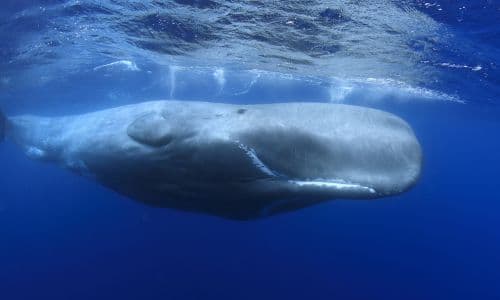
The world's first sperm whale reserve—a Caribbean conservation pioneer

Nature lovers should head to the Caribbean island nation of Dominica in 2026 to explore the world's first sperm whale保护区, which will be established this year as part of the country's commitment to marine conservation [citation:1]. Dominica is actively fulfilling its promises to protect these magnificent creatures, creating a safe haven where visitors can observe sperm whales in their natural habitat. Beyond whale watching, the island—known as the 'Nature Island' of the Caribbean—features lush rainforests, dramatic waterfalls, and world-class snorkeling and diving. Dominica's pioneering conservation model positions it as a global leader in marine protection and responsible wildlife tourism.

Vjosa Wild River National ParkTop rated
6

Vjosa Wild River National Park

Europe's first wild river park—a living ecological laboratory

Vjosa Wild River National Park protects one of Europe's last free-flowing rivers, entirely without dams or artificial interventions [citation:3]. Established in 2023, the park spans 12,727 hectares and hosts over 1,100 plant and animal species, many rare or endangered. The river originates in Greece and travels 270 kilometers through Albania, passing rugged mountains, wide valleys, impressive canyons, and alluvial plains. In 2026, the park attracts visitors seeking active nature experiences: rafting and kayaking on fast-flowing sections, trekking trails with spectacular canyon views, and wildlife observation in untouched landscapes. Habitats range from riverbeds and wetlands to forests and mountain slopes, supporting migratory birds, freshwater fish, and wild mammals. Spring (April–June) and autumn (September–November) offer the best conditions for exploring this model of European river conservation [citation:3].

Serengeti National ParkTop rated
7

Serengeti National Park

The world's greatest wildlife spectacle—the Great Migration

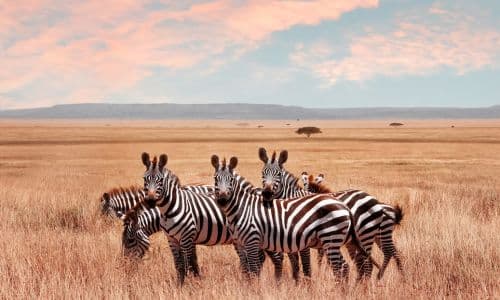
Serengeti National Park remains one of the world's most iconic safari destinations in 2026, renowned for its vast plains and incredible biodiversity [citation:6][citation:7]. The park is famous for the Great Migration, where millions of wildebeest and zebras move in search of food and water, creating a breathtaking natural phenomenon. Beyond the migration, Serengeti offers remarkable opportunities to spot predators like lions, cheetahs, and leopards, as well as diverse bird species. Young adventurers are increasingly drawn to Tanzania for its combination of exotic wildlife, vibrant local cultures, and breathtaking landscapes [citation:7]. The Ngorongoro Crater, often included in Serengeti itineraries, provides one of Africa's most concentrated wildlife experiences in a stunning volcanic caldera.

Etosha National ParkTop rated
8

Etosha National Park

A desert safari like no other—wildlife gathering at ancient waterholes

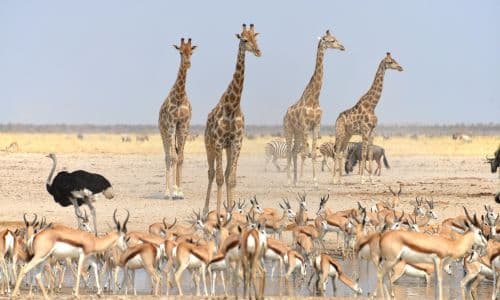
Etosha National Park offers a unique desert safari experience unlike any other in Africa [citation:6]. Known for its otherworldly salt pans, the park's waterholes draw large herds of wildlife, making it one of the best places in Africa to observe animals at close range. Visitors can watch elephants, rhinos, and lions gather around the water, creating mesmerizing and dramatic wildlife viewing experiences. Etosha's arid landscapes, starkly contrasted by the life around the waterholes, provide a truly distinct safari adventure. The park's accessibility and well-maintained infrastructure make it ideal for self-drive safaris, while its unique combination of desert-adapted species sets it apart from more traditional safari destinations.

Yala National ParkTop rated
9

Yala National Park

The world's highest density of leopards in a stunning coastal wilderness

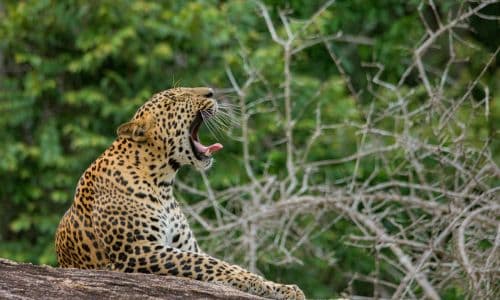
Yala National Park is the place to be for those seeking to spot Sri Lanka's famous leopards, along with elephants, crocodiles, and hundreds of bird species [citation:6]. The park's diverse habitats—including forests, grasslands, and wetlands—support an impressive variety of wildlife, with one of the highest leopard densities on Earth. Yala's unique landscape combines dense jungle with coastal scenery, offering safari experiences that feel both wild and accessible. For wildlife lovers and photographers, Yala is a truly magical place where leopards are seen with remarkable frequency. The park's location in Sri Lanka's southeast also allows visitors to combine wildlife viewing with beach relaxation along the Indian Ocean.

Cabo FrowardTop rated
10

Cabo Froward

The end of the continent—whale watching at the southernmost point of the Americas

Cabo Froward, the southernmost point of the American continent, has been highlighted by The New York Times as one of the 52 places to visit in 2026 [citation:9]. Located on the Brunswick Peninsula in the heart of the Strait of Magellan, this raw, untamed territory is advancing to become Chile's next national park, protecting more than 121,600 hectares. Between December and March, it is one of the best destinations for humpback whale watching, along with sei and fin whales. Visitors can trek the Cabo Froward Heritage Route (4-8 days), kayak through the Strait of Magellan, or hike to the Cruz de los Mares—a 24-meter metallic structure offering unparalleled panoramic views. The area is also home to southern dolphins, Peale's dolphins, pumas, and one of the southernmost huemul populations. This is adventure at the end of the world, where wind, sea, and untamed geography sculpt the landscape [citation:9].